
'A story worth telling': Snohomish County did it before Woodstock
Sunday, 25 January 2026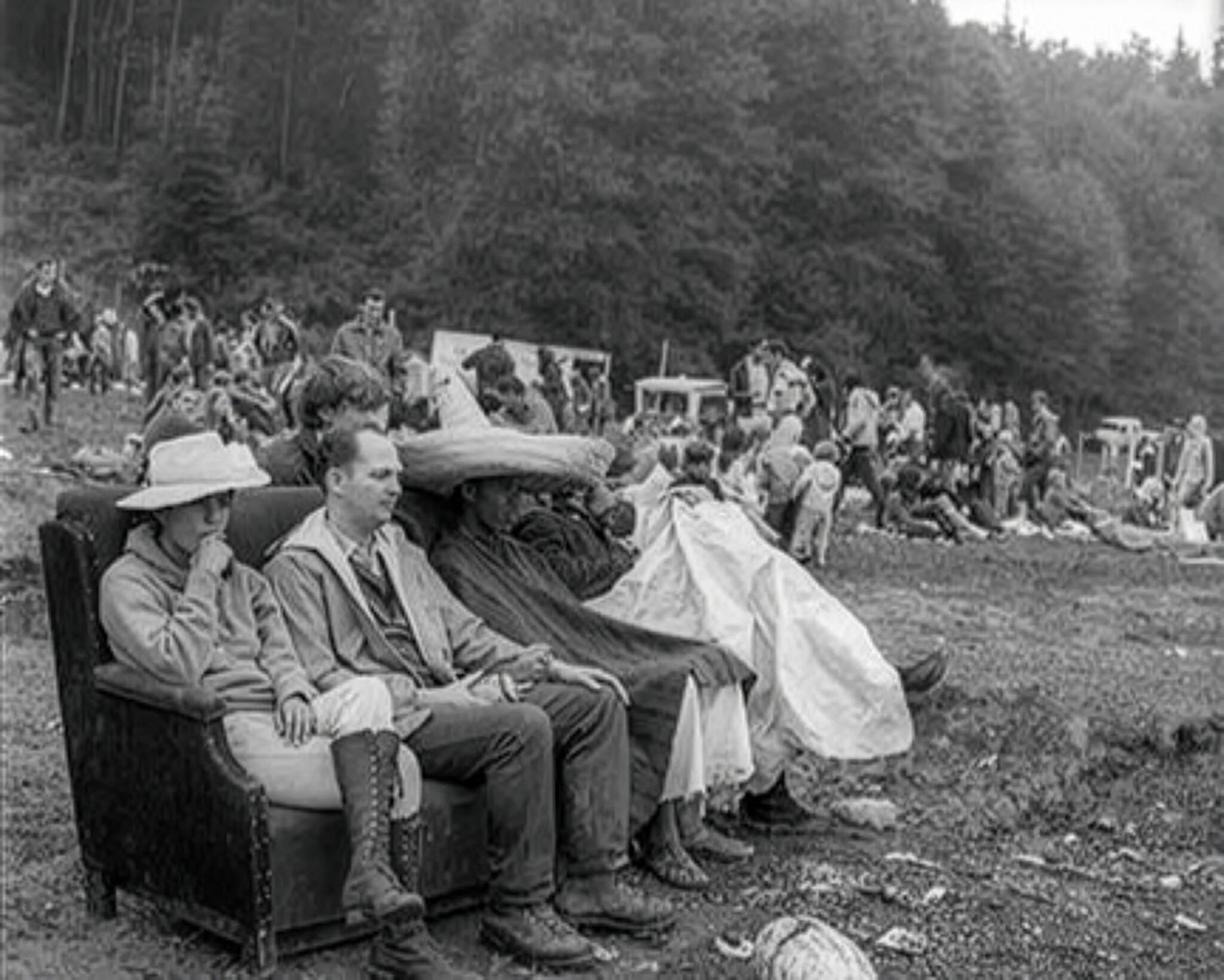
SULTAN -- In April 1968, musician and radio producer Larry Van Over dropped a piano from a helicopter -- with the help of a pilot, of course -- at his farm in Duvall, Washington as the band Country Joe and the Fish played to 3,000 attendees.
The event serves as the setting for the first chapter of local author J.D. Howard's book, "Before Woodstock." While the piano drop did take place a year before Woodstock, the book's subtitle, "The Sky River Rock Festival & Lighter Than Air Fair," depicts the primary setting for Howard's historical fiction novel.
"If we can sell 3,000 tickets for a piano being dropped from a helicopter with one band, what could we do if we got a bunch of bands and we sold all kinds of tickets," Howard said in an interview, explaining the thought that led Van Over and his friends toward creating a rock festival. "We could have a hell of a party."
The scene he described plays out in "Before Woodstock" -- Van Over brainstorms with Paul Dorpat and some other friends.
Dorpat was one of the founders of an underground Seattle newspaper called "Helix." The piano drop was conceived in the Helix office, and the newspaper co-hosted the event. It also played a big role in advertising the Sky River Rock Festival.
As a University of Washington graduate student, Dorpat knew UW philosophy professor John Chambless had reorganized the Berkeley Folk Music Festival. So he enlisted Chambless to become the Sky River showrunner along with friend and Helix employee Cyrus Noe, who took on the role of general manager.
"Those guys, I mean, they're like my heroes," Howard said. "They were really very talented men."
Howard has been a "big music guy" all his life, and the story of Sky River was one he wanted to tell for a long time, he said.
In 1968, Howard was 13 and entering the eighth grade at South Junior High in Everett, which is now Sequoia High School. He was unable to attend the festival in person.
"Some of my friends with older siblings who had wheels and transportation, you know, we got to hear all their stories," he said.
In the 1970s, he lived in Gold Bar.
"Anytime I would meet somebody who went to the festival, I would pepper them with questions," Howard said. "I felt it was a story worth telling."
When the internet became a resource, he created a file and printed anything he could find, which wasn't much, Howard said. Around November 2024, he finally decided to start writing.
"I had figured out the premise. I determined that I wanted to see it through a reporter's eyes. I also determined that I wanted that reporter to also be an outsider so he could really experience everything," he said. "It's a story of personal growth and personal discovery and personal change."
Betty Nelson's raspberry farm
Betty Nelson responded to an ad in the Helix requesting a volunteer to provide an open space large enough for a music festival. She offered up her raspberry farm off Ben Howard Road near Sultan. The natural slope to the field created a perfect amphitheater-like venue.
The festival was named after the Skykomish River, or "Sky River" for short, and the large rock that parted the river -- The Sky River Rock Festival.
While tickets were sold, it's hard to know how many people attended because the open area made restricted entry difficult. Reportedly, between 4,000 and 5,000 people enjoyed some or all of the 45 bands that performed during the three-day festival on Labor Day weekend in 1968.
"There were kids swimming in the river, and they ended up burning one of our hay bales," said Doug Gwilt at one of Howard's book signings, which took place at the Sultan Historical Museum.
Gwilt was 26 in 1968. His parents lived across the street from the festival site, he said.
"We were cleaning up bottles and all sorts of garbage from our yard every day," he said.
Clarence Rowe was 22. He "didn't really care at the time," he said at the book signing, but ended up helping to dig a garbage trench on Nelson's property.
"I just went over to it actually once, probably the third day," Rowe said. "A lot of energy around, but a lot of people were drinking, a lot of people were smoking, and it was a hell of a mess."
"We all thought it was great," he added.
By that time, rain and thousands of feet had turned the ground into ankle-deep mud.
"I just remember the stinking mud," Wes Nagel said at the book-singing. He was 19 when he attended the festival with his wife, Sharon Nagel, who was also 19.
"We parked in Sultan and had to cross the railroad tracks and hike in," she said. "It was a long way with white bell-bottom pants."
Unfortunately, the bell-bottoms did not handle the mud well, and she ended up throwing them away, she said.
"I didn't realize at that time what the bands that are popular now or that made it beyond that," Sharon Nagel said. "That was the beginning of their start. We didn't know that."
The Sky River Rock Festival was the first multi-day outdoor hippie rock festival at an undeveloped site. Woodstock took place one year later, yet it overshadows Sky River in the public consciousness.
The Festival
Howard guides the rider through the musical performances depending on where Cliff, the main character, is on his journey. Sometimes, the artist is background noise as we follow Cliff trying to do his job as a journalist. Sometimes the performance hypnotizes Cliff and awakens multiple senses.
In those instances, Howard waxes poetic.
"I'm in a lot of Cliff -- Cliff's in a lot of me," Howard said. "When I first discovered the Grateful Dead, it just knocked me over."
The Grateful Dead made a surprise appearance at the Sky River Rock Festival. While their popularity continued to grow after the festival, they were already a big deal. They, in part, helped create the hippie movement.
Founding member of the Grateful Dead, Bob Weir, died on Jan. 10.
Other musical acts in the book include the Peanut Butter Conspiracy, Big Mama Thornton, Creedence Clearwater Revival, Santana, The Youngbloods, and The New Lost City Ramblers.
Also, Chief Dan George offers a chant to help stop the rain on day two. The festival's proceeds were to go to Native American and Black American causes. Unfortunately, the festival ended with Chambless and the other investors $10,000 in debt.
"A very wealthy man at that time paid to get them out of the hole," Howard said. "They mortgaged their homes and raised $40,000 to put that together. And at that time, $40,000 in today's dollars was about $370,000."
Van Over's big contribution to the event was a hot air balloon, filled enough to float with a single rider, but not so much the person would fly away.
That said, without a rider, the balloon was plenty buoyant to take off on its own.
In other words, the "Lighter Than Air Fair" lasted less than a day, Howard said.
The festival, however, wasn't just happening on Betty Nelson's farm.
"My goal was to report everything that happened out at Betty's, and also to report everything that was going on in town in Sultan," Howard said.
A number of Sultan residents were not happy the festival was taking place. "Before Woodstock" provides a brief look at the conflict between the older and younger generations at the time.
"Just because they hate hippies doesn't mean that they're really terrible people. They just have their own viewpoints," Howard said.
In an email, Howard pulled a quote from Cliff's thoughts in the book and called it the "overarching statement."
"'They've lived there all their lives, they've raised their kids, they've paid their taxes, they've gone to church -- they've done all those things and they have the right to their opinion, just like we did,'" he wrote. "Young adults were learning back then that they did indeed have a voice and a say in the world, and they were going to use it."
In the end, "Before Woodstock" explores the "biggest and only countercultural event that ever occurred in Snohomish County," Howard said. Historically accurate situations set the stage for a story of growth, discovery and even romance, reminding music lovers of a forgotten history overshadowed by what came after.
Taylor Scott Richmond: 425-339-3046; [email protected]; X: @BTayOkay